Personal Finance MVP
Budget Tracking App
Helping users stay consistent with personal budgeting through automation-first design
B2C • FinTech
Product Type & Domain
3 Months
Timeline
Mobile App • Ionic
Platform
Context
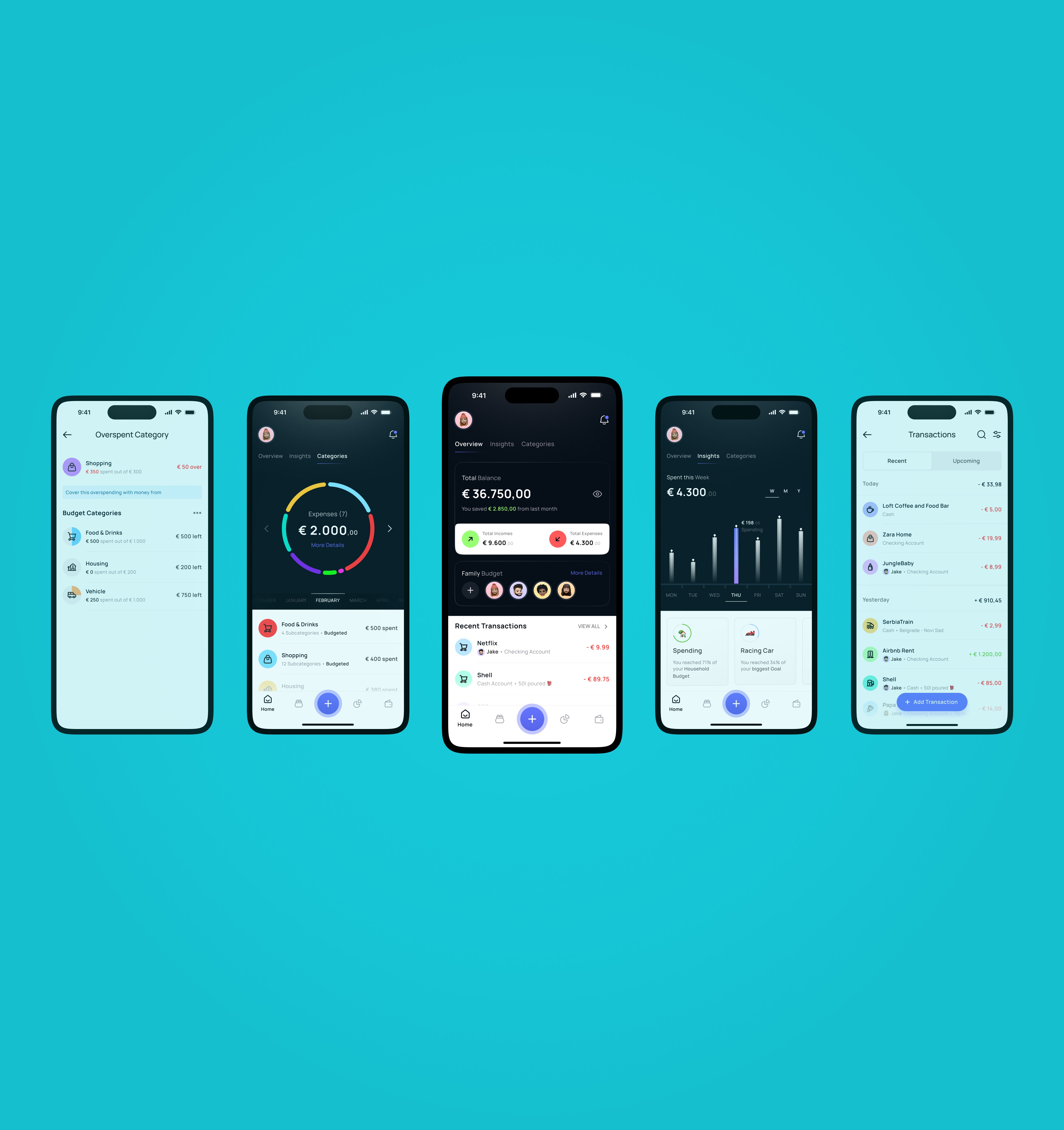
Cut Budget App is an early-stage fintech startup focused on personal budgeting and expense tracking.
The project was designed as an MVP, with the goal of helping users better understand and control their monthly finances.
The product targeted everyday users who wanted a simple way to track income and expenses without the mental overhead of manual bookkeeping.
Problem
Most budgeting apps rely heavily on manual data entry.
Users were expected to log every income and expense themselves — daily, consistently, and accurately.
In reality, this led to:
Broken routines after a few days
Missing or delayed entries
Inaccurate monthly overviews
Loss of trust in their own budget data
Because the system depended entirely on user discipline, even motivated users struggled to maintain consistency over time.
My Role
I was the lead and sole product designer on the project.
I worked end-to-end across:
UX flows and user journeys
UI design
Product structure and feature definition
UX copy and empty states
Collaboration with founders, developers, and external stakeholders
From early ideation to MVP-level designs, I was involved in every design decision.
Process & Key Decisions
We started by analyzing existing budgeting and finance apps to understand:
How users are currently asked to track expenses
Where friction most often occurs
Which patterns fail to support long-term consistency
Through conversations with potential users already using similar apps, one insight stood out clearly:
The problem wasn’t understanding budgeting — it was maintaining the habit.
Based on that, several key design decisions shaped the product:
Automation-first mindset: reducing manual input wherever possible instead of adding “better forms”
Lightweight daily interactions: minimizing effort required to log or review expenses
Clear monthly feedback loops: helping users immediately see the impact of missed or completed entries
The focus was not on adding more features, but on removing friction from the core behavior.
Outcome
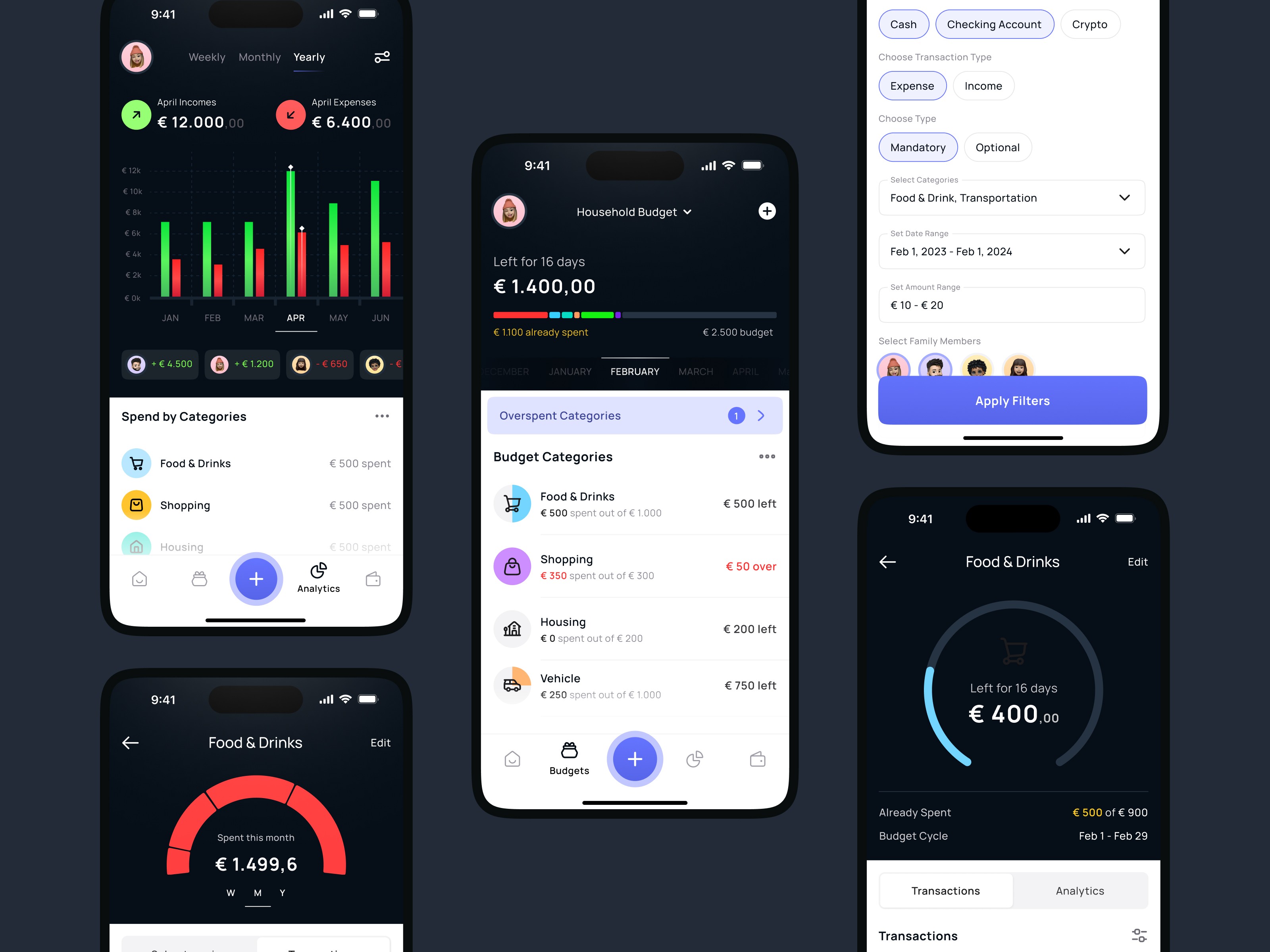
The MVP design successfully reframed budgeting as a low-effort, habit-friendly experience rather than a financial chore.
Although the product did not reach a stable production release due to broader delivery and execution challenges, the design work:
Established a clear product vision
Validated key assumptions through early user conversations
Created a solid foundation for future iterations or pivots
What I Learned
This project reinforced the importance of shipping early and learning fast, especially for habit-based products.
In hindsight, releasing a leaner version sooner would have allowed real user behavior to guide the product direction more effectively — rather than waiting for a “perfect” implementation.
It also highlighted how critical clear communication and alignment are between founders, design, and development in early-stage startups.
Next Projects